When to use the Celtic Cross spread
- A big question with many moving parts, such as a relationship at a turning point.
- A situation keeps repeating and you suspect a deeper root.
- A three-card reading left you wanting a fuller picture.
- You want to see your own part, the people around you and the likely direction at once.
The 10 positions
- 1
The heart of it
The situation at its coreThe situation at its core, as it stands today. Read this card first and let the other nine explain it. If it seems to have nothing to do with your question, look again: it may be naming what the question is really about.
- 2
What crosses you
The challenge across itThe challenge laid across the heart of it, from outside or from within. Put cards 1 and 2 together: this is happening, and this is in the way. A bright card here still counts as the obstacle, so ask how too much of a good thing could be blocking you.
- 3
Beneath
The root under it allThe root under it all: what feeds the situation from below, often something you have not put into words. Think of it as the cause behind the first two cards. When this card surprises you, give it the most thought.
- 4
Behind you
What is passing awayWhat is passing away: a recent influence that helped bring you here and is now fading. Treat it as context for the rest of the reading. A difficult card in this place can be good news, because its hold may already be loosening.
- 5
Above you
What you are reaching forWhat you are reaching for: your aim, or the best this situation could become. The card speaks as advice, so take its guidance as the way to climb toward that aim. If the aim it shows feels far away, that distance is part of the message.
- 6
Before you
What comes nextWhat comes next: the influence moving in over the near future. See it as the next chapter, not a fixed event. Set it beside Behind you (4) to find the direction of travel, from what is fading to what is arriving.
- 7
Yourself
How you meet itHow you meet it: your attitude, your habits and the part you play. This is the card you have the most say over. If it shows you guarded, tired or rushing, that is where one small change could alter the whole picture.
- 8
Around you
People and surroundingsPeople and surroundings: the mood at home or work, and above all the other people involved. Often this card describes one person who matters here, what they bring and how they seem. Take it as their influence, not as proof of what they think.
- 9
Hopes and fears
What you want and dreadWhat you want and what you dread, which can be two sides of one wish. A hopeful card may be a longing you have not admitted; a darker one, a fear that is quietly steering your choices. Ask which it is for you, and whether the fear fits the facts.
- 10
Outcome
Where it is headingWhere things are heading if nothing changes. It is the likely direction, not a sentence passed on you. Read it last, in the light of everything before it: the more the other cards support it, the more it counts.
How to read the Celtic Cross spread
Start at the center, where cards 1 and 2 make the knot you are untying. Then follow the vertical line from Beneath (3) up to Above you (5), from the root to the aim. If the root and the aim pull in different directions, that tension may be the real subject of the reading, more than the question you asked.
Next, read the horizontal line from Behind you (4) through the center to Before you (6). This is the timeline, and it shows whether the situation is easing, building or changing shape. Then turn to the staff and read it from the bottom up, from how you meet the situation (7) to the people around you (8), your hopes and fears (9) and the outcome (10).
Finish by setting the Outcome beside Above you. When the two agree, where you are heading matches what you want. When they clash, go back to Yourself (7), the position most in your hands, and ask what you could do differently. Patterns help too: a crowd of Major Arcana points to forces larger than daily choices, and one suit showing up again and again marks the area of life at stake.
An example reading
“My partner and I feel like roommates lately. What is really going on?”
 1
1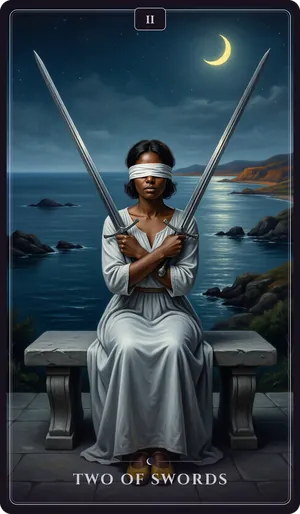 2
2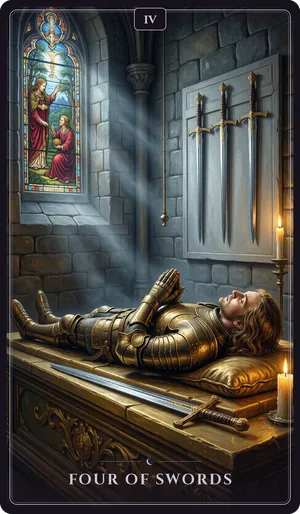 3
3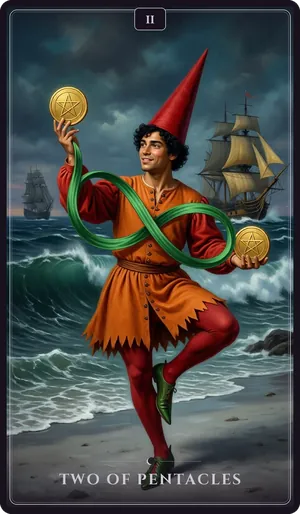 4
4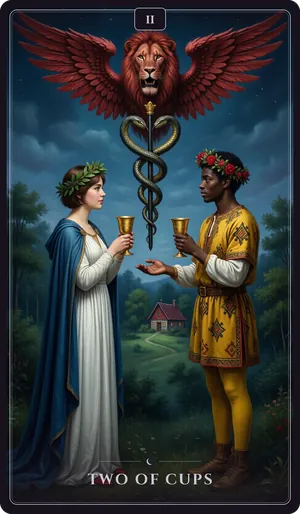 5
5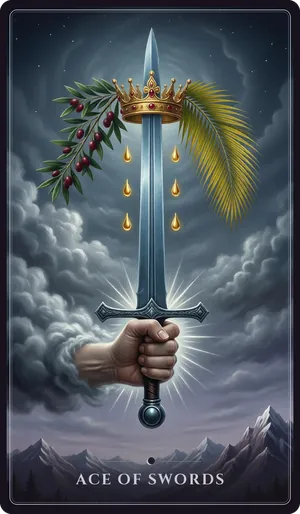 6
6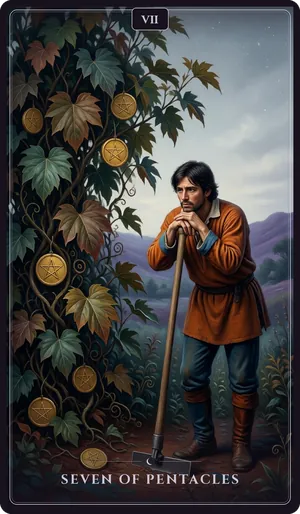 7
7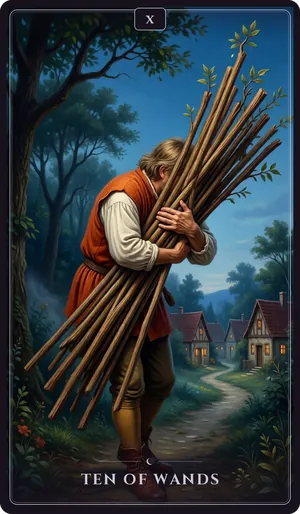 8
8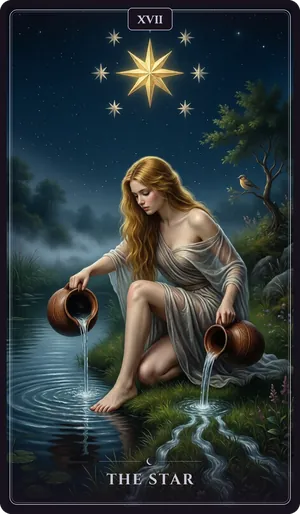 9
9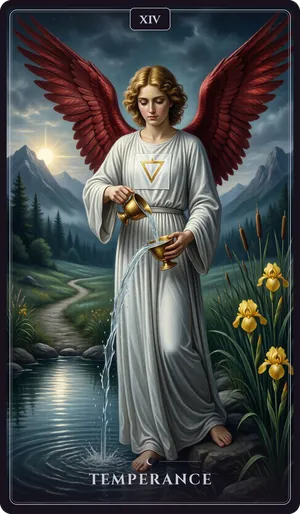 10
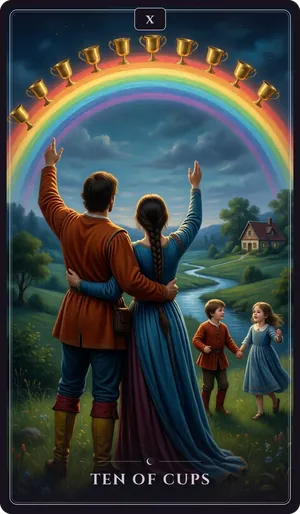
10- 1The heart of itTen of Cups, reversed
At present, harmony at home or in a close relationship feels strained. Values may need to be talked through rather than assumed.
- 2What crosses youTwo of Swords
Avoidance is the real block. As long as the facts or feelings involved stay unexamined, the situation will remain frozen in place.
- 3BeneathFour of Swords
Quiet fatigue lies beneath this situation. Someone is more tired than they let on and needs rest before they can engage fully.
- 4Behind youTwo of Pentacles
You have recently been juggling a lot and found a way to keep it all moving. That adaptability is a skill you built under pressure, and it remains available to you.
- 5Above youTwo of Cups
Meet someone halfway. Offer your cup at the same height as theirs, with honesty and warmth, and let the exchange go both ways.
- 6Before youAce of Swords
A breakthrough is approaching: a fresh idea, a clarifying conversation or a decision that finally feels obvious. Be ready to catch it and use it well.
- 7YourselfSeven of Pentacles
You are committed to this connection for the long haul and willing to tend it patiently. You may also be quietly assessing whether it is growing as you hoped.
- 8Around youTen of Wands
They seem weighed down by responsibilities, perhaps work, family or other obligations. Their distance may come from exhaustion rather than a lack of care.
- 9Hopes and fearsThe Star
Quiet hope is growing where no one can see it yet. Someone may feel more optimistic about this situation than they have openly said.
- 10OutcomeTemperance
Continuing on this path leads toward harmony and integration. Different parts of the situation are likely to blend into something steady and satisfying.
These cards describe a tired relationship, not a finished one. The Ten of Cups reversed puts strained harmony at the heart, and the Two of Swords shows avoidance keeping it frozen. Underneath is fatigue after a busy season, and the Ten of Wands suggests your partner is overloaded, not uncaring. The Star holds more hope than either of you has voiced. The Ace of Swords points to an honest talk, the Two of Cups asks you to meet halfway, and Temperance suggests that path leads toward a steadier balance.
Tips for reading the Celtic Cross spread
- Write your question down before you shuffle. One clear question keeps ten cards telling one story.
- Before reading any text, look at all ten cards for a minute. Notice the suits, the Majors and which card catches your eye.
- Keep reversals off for your first few Celtic Crosses. Ten upright cards are plenty to learn from; switch them on in your profile later.
- Note the card that surprised you most in the journal under your reading, then look at it again in a month.
Questions
How long does a Celtic Cross reading take?
Give it a quiet half hour. Laying out the cards takes only a minute or two, but ten cards hold more than one sitting can take in. A second look a day later can show links between positions that you missed the first time.
Why do books number the Celtic Cross positions differently?
There is no single fixed order. A. E. Waite described the layout in The Pictorial Key to the Tarot (1910) and put the crowning card third. Here the root beneath comes third and the aim fifth, so you see what lies under the situation before you look up. Whichever order you use, keep to it.
Do I need a significator card?
No. Some readers first pick a card to stand for themselves, called a significator, and lay the spread over it. Moonlit Grove keeps all 78 cards in play instead, and lets the first card, the heart of it, describe the situation as it is now.
Can I use the Celtic Cross for a love question?
Yes, and it suits one well. Yourself (7) reflects how you are showing up, Around you (8) can describe the other person, and Hopes and fears (9) brings out what you want and dread about the bond. Choose Love as your focus before you draw, and the reading leans toward the relationship.
Can I ask a yes or no question with the Celtic Cross?
You can, but it is more spread than you need. A single card answers yes or no more clearly, and the Grove's Yes or No reading is free. Choose the Celtic Cross when you want to understand why: what is in the way, what lies beneath it and what you can do.